
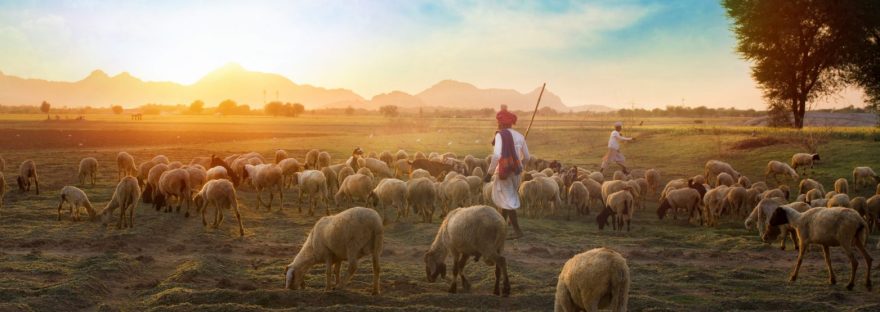
The liberalization of the Indian economy in the 1990s has led to the migration of thousands of indigenous peoples to the metropolis, primarily to work in unorganized sectors. As COVID-19 destroys economies and the absence of jobs, homes, and food loom large; these indigenous migrant workers are returning to their respective places called reverse migration.
The reverse migration of laborers to India’s hinterlands is having a differentiated impact across regions. For a labor-intensive industry such as real estate, the reverse migration is tantamount to the last straw on the camel’s back. Labour shortage, near-total restrictions on logistics, and transport have disrupted supply chains, creating a scarcity of raw materials and estimated job loss of 30% in the real estate industry. In the agricultural sector the operations in the well-endowed regions are about to suffer and the hinterlands are receiving an excess supply of laborers, throwing up new challenges and opportunities to face.
India’s agricultural sector depends on migrant laborers for several operations. Now, an estimated 50 million migrant laborers (of India’s 140 million) are expected to have returned to their native places from cities following the nationwide lockdown from March 24. They account for about 11% of the non-self-employed labor force. Many migrant laborers, mainly from eastern states, are working in agricultural fields in the country’s west and north. They were also significantly employed in marine fishing, post-harvest activities, managing livestock, in marketing, and in the creation of agricultural infrastructure.
It appears that the migrants’ return is having a negative impact on agriculturally developed regions like Punjab, with the proximate cause being the harvest of important rabi crops like wheat and mustard, resulting in a higher production cost.
Another setback in the agriculture sector is affecting demand for inputs like fertilizers, pesticides, farm machinery, etc. Further, demand for other industrial and consumer goods would be affected as well, with ramifications for industrial growth. Ensuring sufficient flow of institutional credit to agriculture and small-scale industrial sectors is of critical importance now.
Change is an opportunity!
How this could be boon now?
Reverse migration due to COVID-19 provides an opportunity for hinterland administration to engage the returned laborers in gainful employment and the sole short-term option is to leverage the potential of agriculture. Especially labor-intensive sectors like livestock, fisheries, and food processing have not developed over the years, and the laborers who have returned can be used to reverse this trend. Budget 2020 also highlights measures for diversification within and beyond the crop sector. With their growth rate exceeding 7 percent, fishery and livestock are impressive examples of market-driven growth. A favorable policy environment, credit, and institutional support announced in the Budget will help in sustaining the high growth of these sectors for many years.
As Infrastructure is the second-most important factor after reforms for the transformation of agriculture, which has been emphasized in the Budget 2020, Laborers can also be involved in the creation and revamping of rural infrastructure (both farm and non-farm), Godowns, water management and in food and fodder processing. The labor has to substitute for the probably reduced input application in agriculture to help maintain the production level, resulting in increased factor share of labor in the agricultural sector. Activities under the Mahatma Gandhi National Rural Employment Guarantee Act should be promoted to engage migrants in agricultural activities and ensure, intra-household food security in rural households.
Though long-term strategies shall be qualitatively different, focusing more on other sectors but, agro-based activities and enterprises should be a key element. Improving the labor and land productivity with a critical strategy can be done by changes in the organization of land, land and water development, food processing, and value addition and rural industries. Models that harness economies of scale in rural areas and mass absorption of laborers need to be evaluated
COVID-19 could reinvent the importance of the agriculture sector and reverse the trend, as it is the one sector on which our labor force can fall upon at a time of crisis. Reviving this sector will be the key in the post-COVID-19 phase of the Indian economy.
Change caused by others provides opportunity to you. Change tinkered by you will offer opportunity to others!
-Suresh Prabhu, Union Minister for Commerce
Reference
https://www.iwgia.org/en/india/3550-covid-19-india-reverse-migration.html
https://thewire.in/agriculture/reinventing-agriculture-in-the-time-of-covid-19

 writerkraft
Very nice analysis. It’s crucial how these migrants are kept busy by offering them jobs in rural economic activities. If not channelised properly, it would be a disaster
LikeLiked by 1 person
Congratulations and appreciated little girl.
LikeLiked by 1 person
Thank you 😇
LikeLike