
The dramatic spread of COVID-19 has disrupted lives, livelihoods, communities and businesses worldwide. Since December 2019, this disease has grabbed the headlines around the world like its successors of corona family like Middle East Respiratory Syndrome(MERS), and Severe Acute Respiratory Syndrome (SARS). COVID-19 pandemic has affected 90% of all nations, with rapidly shifting epicenters.
Policy makers and public health efforts have barely addressed the gender impacts during disease outbreaks and the response to Coronavirus disease (COVID 19) is no different. We are hardly aware of any gender analysis during outbreak by global health institutions or governments in the countries that are affected. The fundamental step to be taken during this high time is to recognize to which extent the disease outbreaks affect women and men differently.
The sex- disaggregated data for COVID-19 show equal number of cases between men and women so far, its found that there are sex differences in mortality and vulnerability to the disease. Evidences suggest that more men than women are dying, potentially due to sex-based immunological or gendered differences, such as patterns and prevalence of smoking. . Simultaneously, data from the State Council Information Office in China suggest that more than 90% of health-care workers in Hubei province are women, emphasizing the gendered nature of the health workforce and the risk that predominantly female health workers incur.
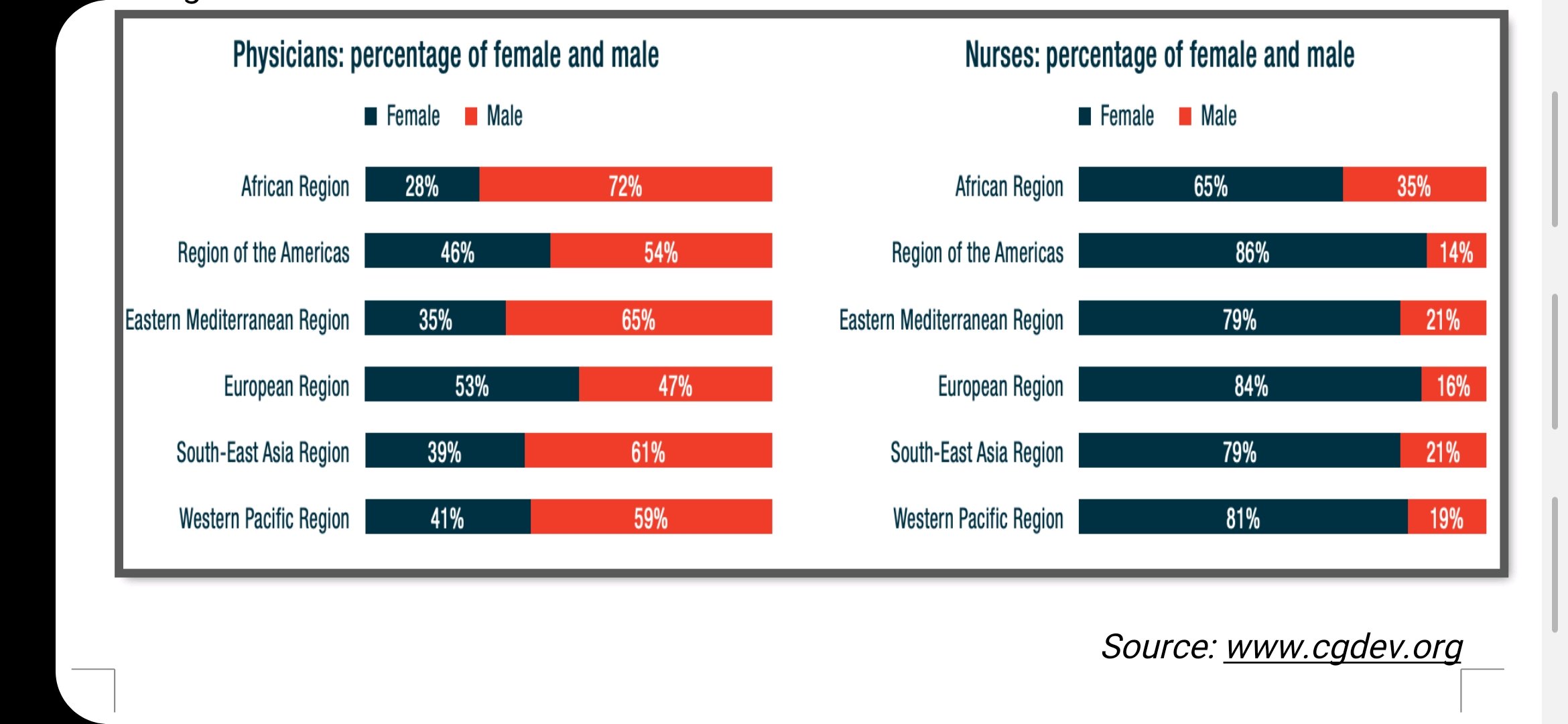
From the chart above, we can find that in developing countries more than sixty percent of men are physicians and nearly eighty percent of the nurses are females, which show the vulnerability of women towards the Coranavirus.
Bitter experience from past outbreaks shows the importance of incorporating a gender analysis into preparedness and response efforts to improve the effectiveness of health interventions and promote gender and health equity goals. During Ebola virus outbreak (2014-2016), gendered norms meant that women were more likely to be infected by the virus as they were given their predominant roles as caregivers within families and as front-line health-care workers.
Similarly, resources for reproductive and sexual health were diverted to the emergency response, contributing to a rise in maternal mortality in many regions of the world also, women and girls are at higher risk of intimate partner violence and domestic violence. Also, The lockdowns triggered by COVID-19 are taking a disproportionate toll on women in the labour market, as the sectors with high rates of female employment are experiencing heavier job losses while increased childcare needs during school closures exert an outsized impact on working mothers.
The main concern today is women have not been fully incorporated into global health security surveillance, detection and prevention mechanisms. Despite the WHO Executive Board recognize the need to include women in decision making for outbreak preparedness and response, there is inadequate women’s representation in national and global COVID-19 policy spaces.
To respond, UNICEF has termed five actions for gender equality in the Coronavirus Disease (COVID-19) :
- Care for care givers
- Prepare for increases in gender-based violence throughout the COVID-19 outbreak
- Maintain core health and education services and systems
- Engage women’s and youth rights networks to support connectivity and the flow of vital information
- Ensure gender data are available, analyzed and actionable
Around the world, women make up seventy percent of health and social service workers and for the response to disease outbreak like COVID-19 to be effective, it is important that gender norms, roles and relations that influence men’s and women’s differential vulnerability to infection, exposure to pathogens and treatments received are addressed.
References
Smith J. Overcoming the “tyranny of the urgent”: integrating gender into disease outbreak preparedness and response
Alon, T, M Doepke, J Olmstead-Rumsey and M Tertilt (2020), “The Impact of COVID-19 on Gender Equality”, Covid Economics: Vetted and Real-Time Papers

 writerkraft